
Plastic post-processing: polishing
author: Universe plastic
2024-09-13
Polishing of plastic parts is a post-processing process that aims to improve the smoothness and gloss of the plastic surface through mechanical or chemical methods to improve the appearance or meet certain functional requirements.
Polishing treatment is widely used in many industries, especially for plastic parts with high precision requirements and high appearance quality, such as auto parts, home appliance casings, optical parts, etc. Universe Plastic Engineers will teach you about the polishing processing of plastic parts.

Benefits of Plastic Polishing
1. Improve appearance
The polished plastic parts have high gloss and smooth surface, which can greatly improve the appearance of the product.
2. Reduce friction
Plastic parts with smoother surfaces can reduce friction and extend product life.
3. Improve transparency
For transparent plastics, such as acrylic and polycarbonate, polishing can significantly improve the transparency and clarity of the material.

Common methods of plastic polishing
1. Sanding with sandpaper
It is often used as a preliminary treatment to remove surface irregularities and burrs by gradually reducing the sandpaper grit.
2. Polishing machine treatment
The high-speed rotating polishing wheel or cloth wheel is combined with the polishing paste to further improve the surface smoothness, which is suitable for complex shapes and large-sized plastic parts.
3. Grinding and polishing
Using tiny abrasive particles for grinding, it is suitable for processing high-precision plastic parts, such as mirror-effect products.
4. Solvent polishing
The surface of the plastic part is immersed in a specific solvent for a short time to dissolve an extremely thin layer of material on the surface, thereby achieving a smooth effect. This method is suitable for processing thermoplastics such as PMMA (acrylic) and PC (polycarbonate).
5. Flame polishing
The surface of the plastic is quickly melted by a high-temperature flame to achieve a smooth effect. This method is suitable for transparent plastics such as acrylic.
6. Ultrasonic polishing
It uses high-frequency ultrasonic vibration and tiny abrasives to finely polish the plastic surface, which is suitable for small and complex plastic parts.
Plastic parts polishing applications
1. Automotive industry:
plastic car lamp covers, instrument panels and other parts that require high smoothness.
2. Electronic products:
mobile phone casings, computer accessories, etc. need to be polished to improve the appearance quality.
3. Medical devices:
Some medical plastic parts require smooth surfaces to reduce friction or facilitate sterilization.

Summarize
The polishing process of plastic parts requires the selection of an appropriate process based on material characteristics, product requirements and surface conditions to achieve the ideal effect.
Dongguan Universe Plastic Factory has more than 15 years of injection molding manufacturing experience, a professional team and advanced equipment, and can provide high-quality injection molding and post-plastic polishing processing services.
If you are looking for a one-stop plastic manufacturing factory, welcome to contact us for the latest service information.
Plastic post-processing: ultrasonic welding
Plastic Structural Design: Wall Thickness
Related Article

Reasonable wall thickness design is one of the keys to the successful design of plastic parts, which will directly affect the molding quality, mechanical properties, appearance quality, manufacturing cost and other aspects of plastic parts.
Plastic Structural Design: Wall Thickness

Compensation In the design of plastic structures, plastic shrinkage compensation is an important consideration, because during the plastic molding process, after high temperature and cooling, plastic parts will shrink in volume to varying degrees due to the material.
Plastic Structural Design: plastic shrinkage compensation

In plastic structure design, draft angle is a very important parameter in mold design, which refers to the inclination angle between the plastic part and the mold parting surface.
Plastic Structural Design: Draft Angle

In plastic structural design, snaps are a common connection method used to join two plastic parts together without the use of screws, rivets or glue.
Plastic structure design: plastic buckle

Gussets ribs are a common design element in plastic structural design, mainly used to enhance the strength and stiffness of components
Plastic structural design: gussets ribs

After the injection molded plastic is manufactured, further post-processing measures will be taken to improve the appearance, performance and practicality of the injection molded parts.
Injection molding plastic post-processing technology
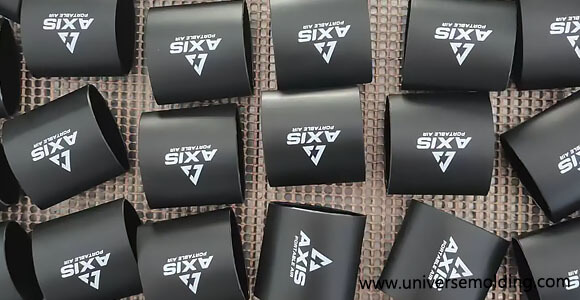
Plastic pad printing is a technology widely used in printing plastic products. It has the advantages of good printing quality and simple operation, but it also has certain limitations, such as high requirements for equipment and materials, and printing quality is affected by many factors.
Plastic post-processing: plastic pad printing
Get a free online quote today!