
What is the difference between P20 mold steel and 718 mold steel ?
author: Universe plastic
2024-01-09
What is P20 Mold Steel ?
P20 mold steel is a type of low-alloy steel that is typically used for injection molding applications. Its full name is P20 1.2311 mold steel, and it is also referred to as AISI P20 steel. P20 mold steel contains about 0.28-0.40% carbon, 1.40-1.60% silicon, 0.60-1.00% manganese, 0.80-1.20% chromium, and 0.15-0.25% molybdenum, as well as other trace elements.

What is 718H Mold Steel ?
718H mold steel is a type of high-performance, pre-hardened steel that is commonly used for injection molding and other tooling applications. It is also known as 1.2738 steel or AISI P20+Ni steel. 718H mold steel contains 0.20-0.30% carbon, 0.30-0.70% silicon, 0.20-0.50% manganese, 2.50-3.50% nickel, 0.90-1.50% chromium, and 0.35-0.55% molybdenum, as well as other trace elements.

The advantage of 718H Mold Steel
It is specifically designed to have high toughness and excellent resistance to distortion and cracking during the heat treatment process. The steel is pre-hardened to a hardness of 30-36 HRC, and can be further hardened by tempering or induction hardening. 718H mold steel has good wear resistance, machinability, and polishing ability, and is resistant to corrosion and oxidation. It is commonly used to make large and complex molds with high precision and durability requirements, such as automotive parts, home appliances, and electronic devices.

P20 Mold Steel vs. 718Mold Steel Properties
| Property | P20 Steel | 718H steel |
| Chemical composition (%) |
0.28-0.40% carbon, 1.40-1.60% silicon, 0.60-1.00%manganese, 0.80-1.20% chromium, 0.15-0.25% molybdenum |
0.20-0.30% carbon, 0.30-0.70% silicon, 0.20-0.50% manganese, 2.50-3.50% nickel, 0.90-1.50% chromium, 0.35-0.55% molybdenum |
| Hardness (HRC) | 28-32 HRC | 30-36 HRC |
| Toughness | normal toughness | better toughness |
| Corrosion resistance | normal toughness | better toughness |
| Price | Cheap | Expensive |
| Maximum working temperature(℃) | 200 ℃ | 300 ℃-400 ℃ |
P20 or 718H ?
In general, if the production volume is low or the part geometry is not complex and precise, P20 mold steel may be a good choice. If the production volume is high, the part has complex geometries, and the matter of durability and precision are extremely important, then 718H mold steel may be a better choice.

However, the final choice depends on a careful analysis of specific application requirements, process conditions, and budget constraints, as well as consultations with industry experts and injection mold suppliers. It is advisable to conduct a cost analysis to determine the best material that can provide the desired performance while maintaining a reasonable production cost.
For further information about P20 and 718H, please contact UniversePlastic.
Universeplastic offers a one-stop injection molding service from product design to actual production.
Universal Plastics Custom Injection Molding
Thermoforming and Injection Molding Plastic Manufacturing
Related Article

Plastic thermoforming and injection molding are the two most common manufacturing processes used in the production of plastic products, and both offer unique advantages depending on the specific application.
Thermoforming and Injection Molding Plastic Manufacturing
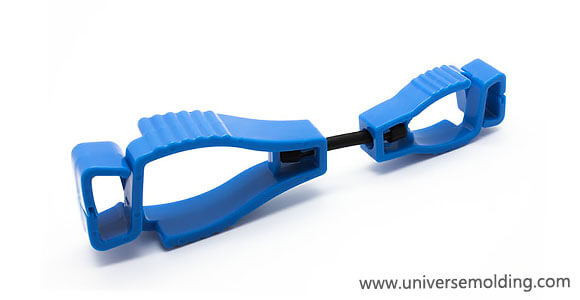
We provide customized production of various plastic clips. The price of plastic clips produced through the injection molding process will be very low. Welcome to consult.
Custom POM Plastic Clips by Injection Molding Process

Reduce the injection molding flash produced during injection molding and improve the quality and appearance of the product.
Injection molding problem: plastic burrs

The global injection molding market is full of opportunities and challenges, and industry players need to be flexible in responding to market changes. Meet changing market demands through continuous innovation, green production and adaptive strategies.
New opportunities and challenges in the injection molding industry
Get a free online quote today!