
Injection mold structure: mold slider
author: Universe plastic
2024-06-28
What is a mold slider?
The mold slider is an important moving part in the mold, usually made of high-strength materials to withstand the huge pressure and friction generated during the injection molding or stamping process.
The mold slider is used to solve the demoulding problems caused by the complexity of the product shape and structure during the mold forming process. It is usually used for lateral grooves, holes, lateral protrusions, etc. of products, and is widely used in molds such as injection molding and stamping.
When designing and processing the slider, factors such as its motion trajectory, guidance method, and locking device need to be considered to ensure its stability and durability during mold operation.

Slider type
Linear slide: The slide moves in a straight line when the mold is opened and closed. Typically used to treat simple lateral grooves or holes.
Angle slider: The slider moves at a certain angle when the mold is opened and closed. It is often used in complex product structures to better achieve lateral core pulling.
Inclined top slider: Also called inclined roof, the slider moves in an oblique direction when the mold is opened and is used to handle lateral protrusions or lateral grooves on the product.
Multi-directional slider: It can achieve core pulling and molding in multiple directions at the same time, and is used for very complex product structures. Precision design and manufacturing are often required.
Spring slider: When the mold is opened, the slider returns by spring force, usually used for lateral core pulling of small parts.
Hydraulic slider: The hydraulic system is used to drive the slider, which is suitable for core pulling operations that require greater force and is often used in large and complex molds.
Pneumatic slider: The pneumatic system is used to drive the slider, which is suitable for small and medium-sized molds and has the characteristics of fast response and precise control.

Slider design and manufacturing details
1. Material selection
The slider is subject to greater pressure and friction during the molding and demoulding process, so it is necessary to choose high-strength, wear-resistant materials, such as high-carbon steel, alloy steel, etc.
2. Heat treatment
Perform appropriate heat treatment (such as quenching, tempering) on the slider to improve its hardness and wear resistance.
3. Precise size
The size and tolerance of the slider need to be precisely controlled. If the slider gap is too small, it will increase wear and movement resistance, and if the gap is too large, it will cause the slider to shake and affect the molding quality.
4. Movement orientation
The slider requires a properly designed guide device, such as a guide post, guide sleeve or guide rail, to ensure smoothness and accuracy during its movement.

5. Locking mechanism
When the mold is closed, an effective locking mechanism (such as wedge, wedge) is required to fix the slider to withstand the molding pressure.
6. Slope design
The slope design of the slider needs to consider the mechanical requirements during the molding and demoulding process. Usually the slope is 2° to 5°. An excessively large slope will increase the resistance to the movement of the slider, and an excessively small slope may not allow effective demoulding.
7. Smooth surface
Ensure the smoothness of the slider slope to reduce friction and wear.
8. Lubrication treatment
The moving part of the slider needs to be designed with appropriate lubrication treatment to reduce friction and wear and extend the service life of the slider.
9. Cooling system
In high-temperature environments, a cooling system needs to be designed to prevent the slider from overheating and maintain its stability.
10. Structural location
When designing the slider, it is necessary to analyze the structure of the product in detail and determine the position, shape and number of the slider to meet the molding requirements of the product.
11. Strict assembly
During the assembly process, ensure the precise fit of the slider and other parts of the mold to avoid functional failure due to assembly errors.

High quality mold manufacturing
It is necessary to design and manufacture high-performance mold sliders to ensure the normal operation of the mold and the high-quality molding of the product.
It requires rich mold manufacturing experience, and the manufacturing process has strict requirements on processing equipment, and precision processing and quality control must be achieved.
Universe Plastics' team of mold engineers can complete high-quality injection mold manufacturing. If you encounter problems with mold slider design and manufacturing, you can contact us.
Factors affecting injection molding: injection molding machine
High quality manufacturing: surface roughness unit parameters
Related Article
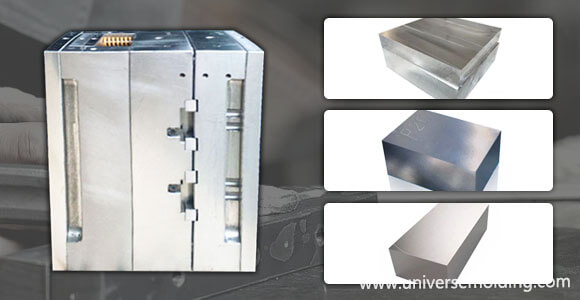
The following are some commonly used mold steel materials
Plastic Mold Manufacturing Material Selection Guide
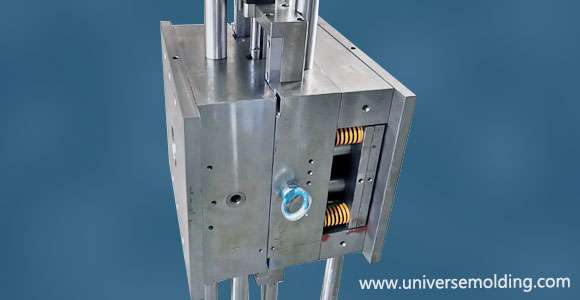
There are 5 types of injection molds
Injection mold types, structures and characteristics

Injection molds have a great impact on injection molding, and you need to choose an injection mold manufacturer with guaranteed quality.
The impact of plastic molds on injection molding

Plastic parts produced by an injection-molding operation include electronic product casings and plastic glove clips.
Plastic parts produced by an injection-molding operation

The latest internet data shows that the following are the top 10 injection molding companies in usa
Top 10 Injection Molding Companies In USA

Restroom signage guide, understand the sizes of restroom signage types, small batch customization services
What are some common restroom signs?

A complete guide to injection molding to help you understand what injection molding is, the steps and processes of injection molding, and where to find high-quality injection molding services.
About Injection Molding

Tactile tile is widely used on public pathways and access routes that can be felt underfoot and recognised as a warning of impending pedestrian hazard, particularly to the vision impaired, but also as an added safety precaution to all pedestrians.
Make your own TGSI tactile tiles AS/NZS 1428.4.1:2009
Get a free online quote today!